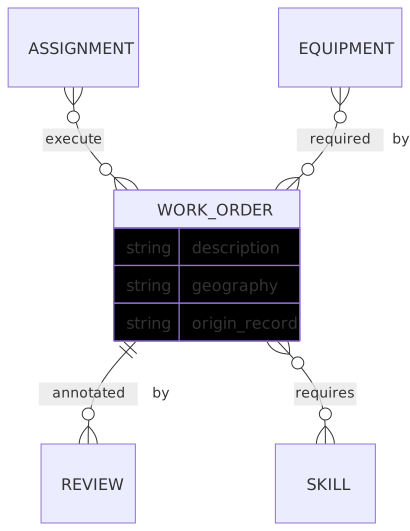
Nidus Relationship Map
Select any passage to ask a question about it or to propose replacement wording.
Nidus Relationship Map
Foundation: Ontology · Glossary · Relationship Map
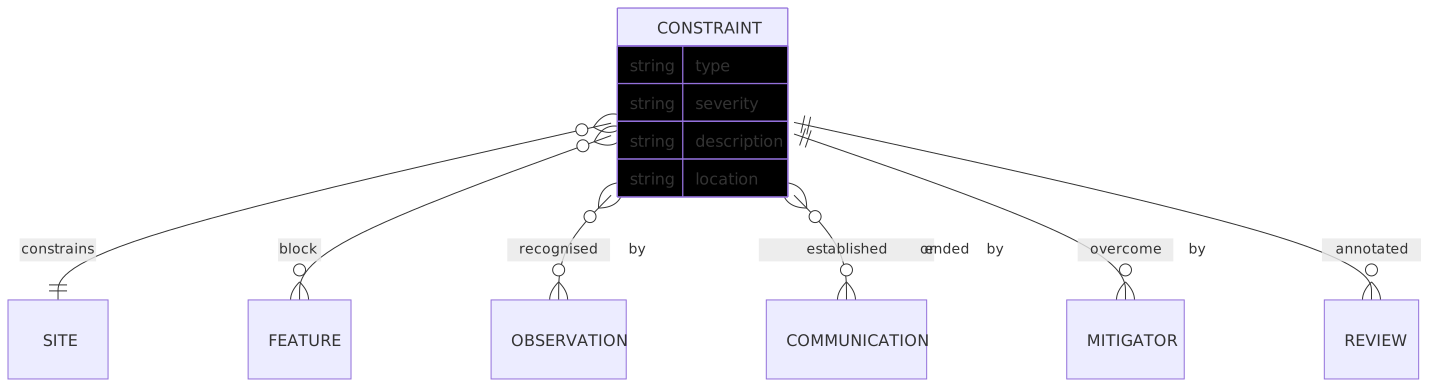
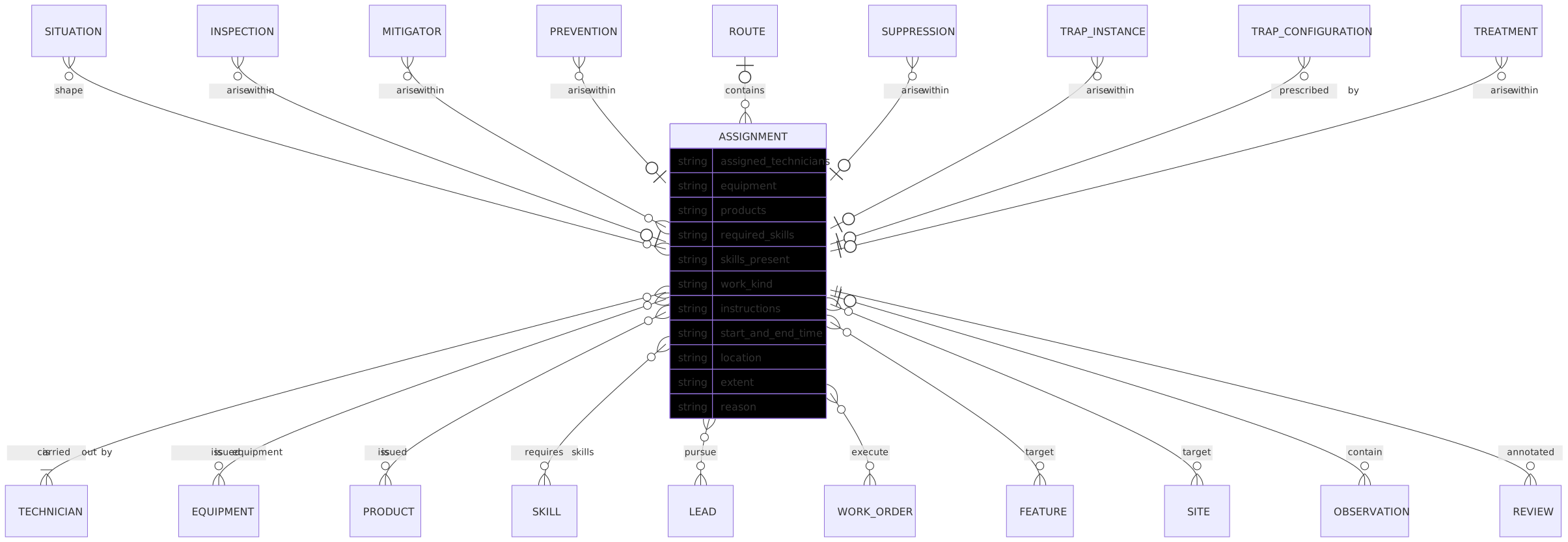
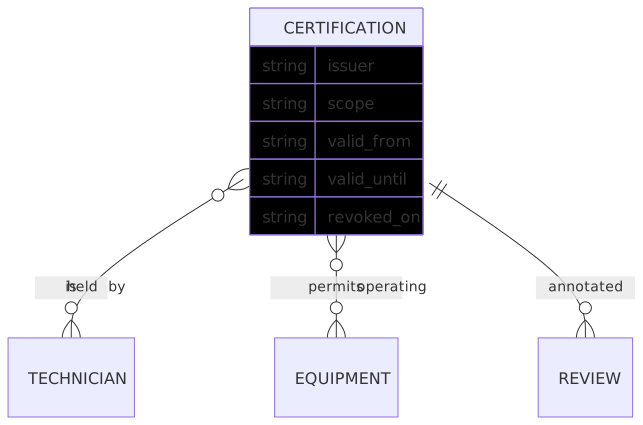
Every relation stated in a concept document appears here. The first diagram carries the whole graph without labels, so the shape and the multiplicities stay readable. Each concept's own section repeats its relations with their wording and lists its properties.
Cardinality reads left to right: || one, o| zero or one, o{ zero or more, |{ one or more.
All objects
Drag to pan. Scroll, pinch or use the buttons to zoom.
Every line is one relation the map states, drawn between the two objects it joins. The marks at its ends are the cardinality the map gives that relation: || exactly one, o| zero or one, o{ zero or more, |{ one or more.
List all 123 relations as text
| Object | Cardinality | Relation | Cardinality | Related object |
|---|---|---|---|---|
| Constraint | zero or more | is related to | exactly one | Site |
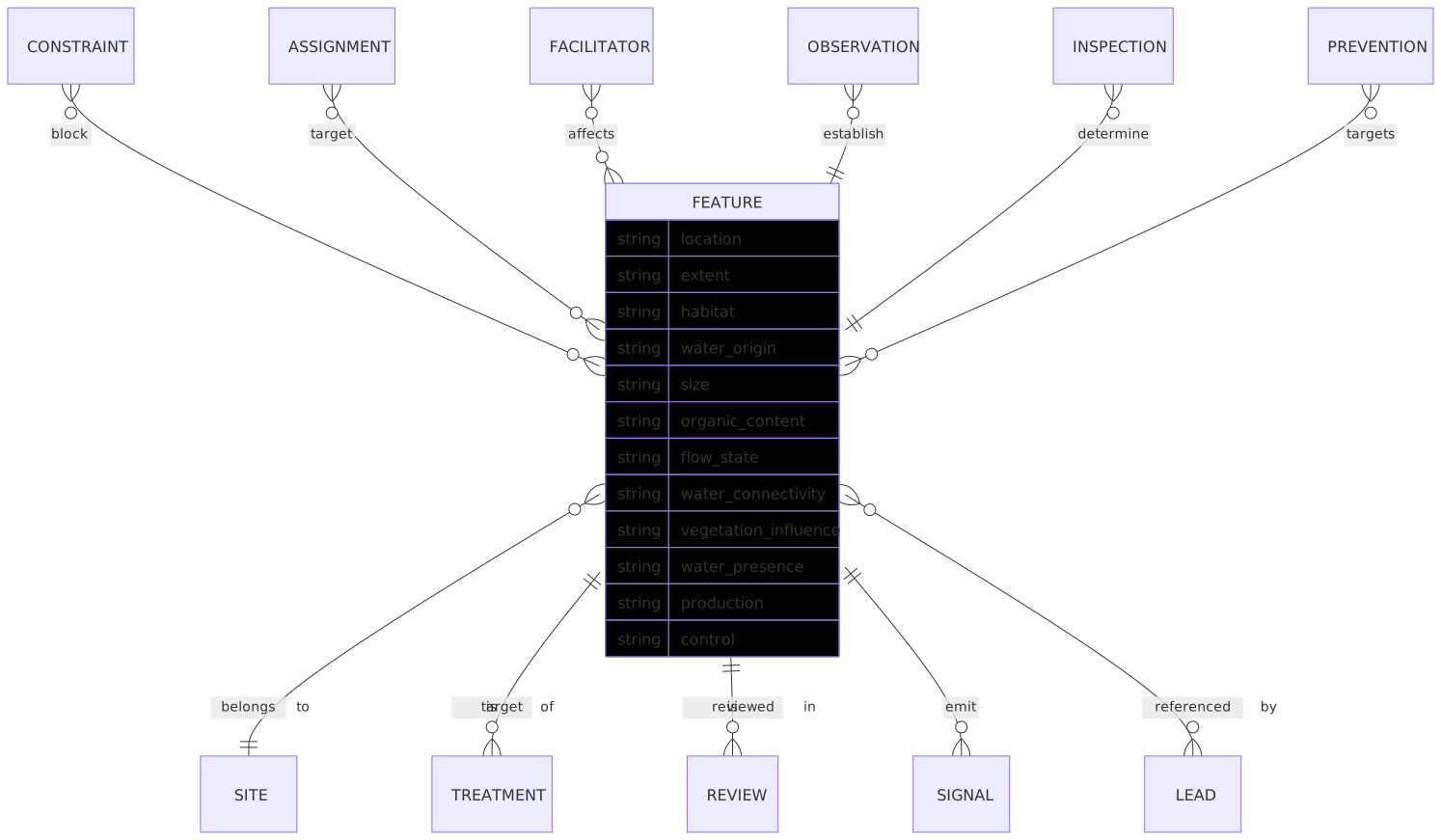
| Constraint | zero or more | is related to | zero or more | Feature |
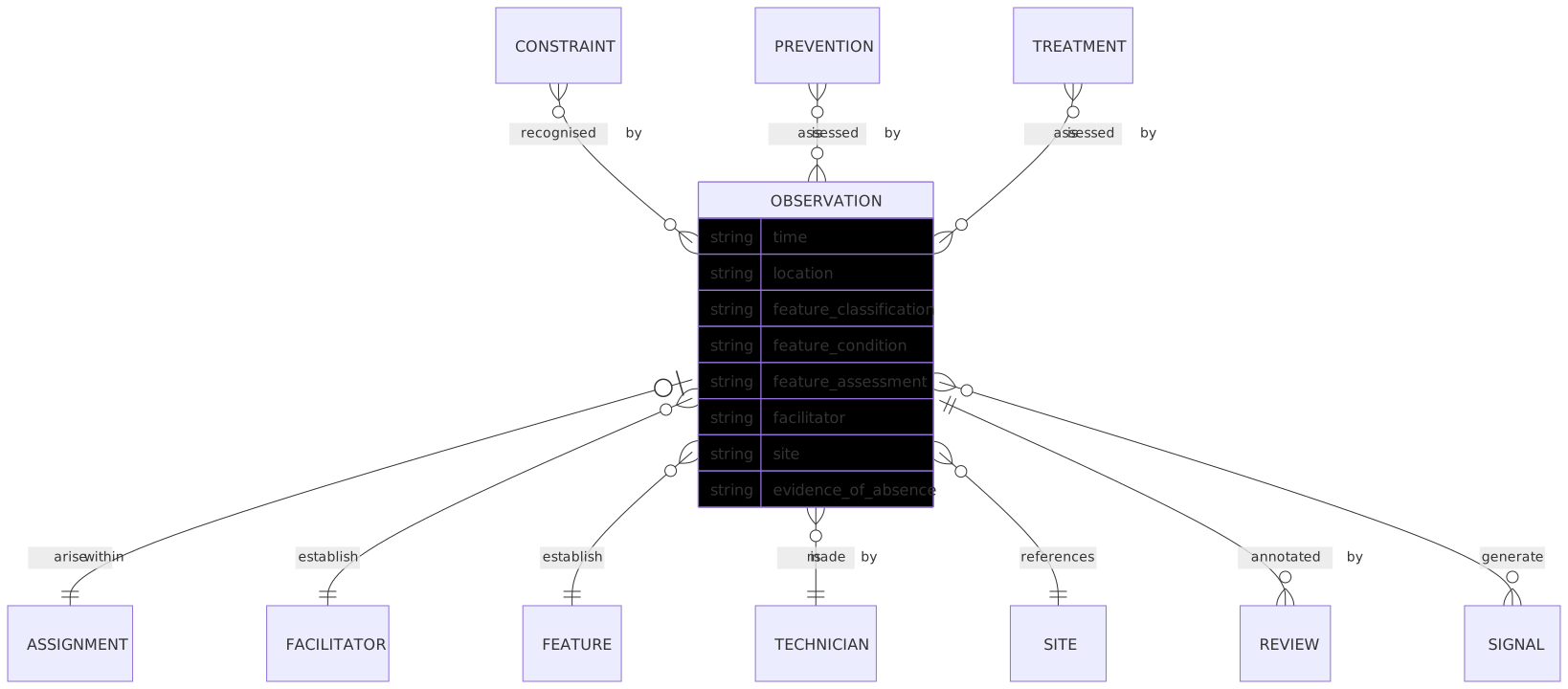
| Constraint | zero or more | is related to | zero or more | Observation |
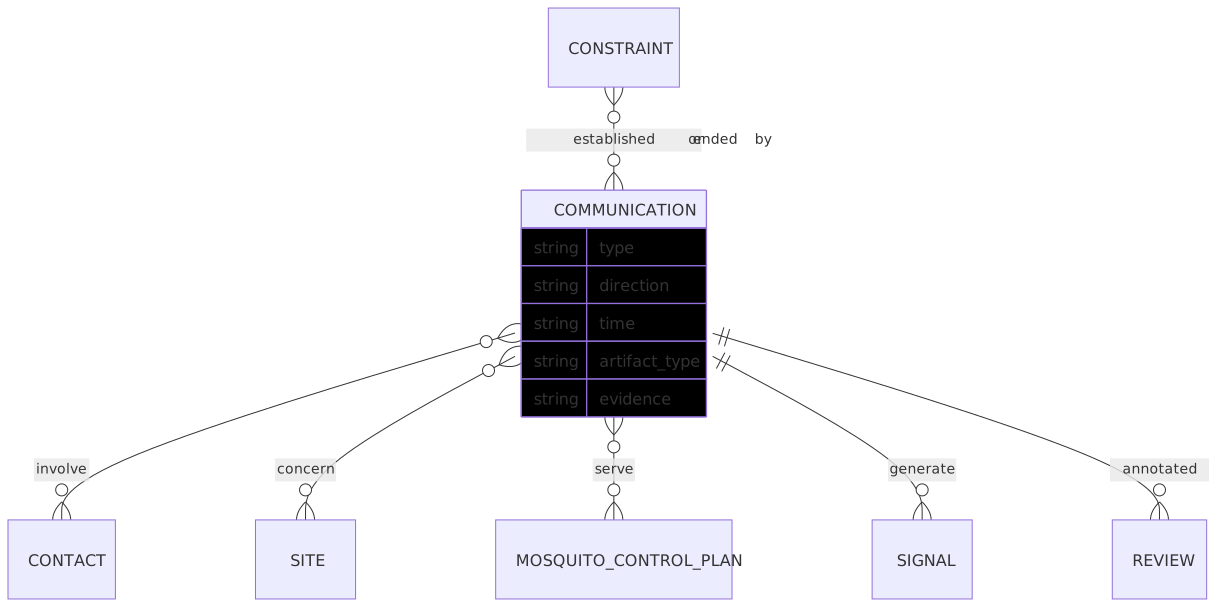
| Constraint | zero or more | is related to | zero or more | Communication |
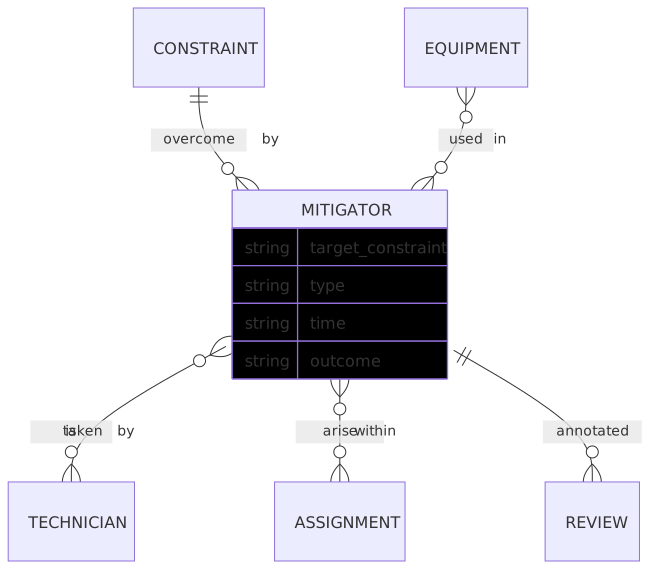
| Constraint | exactly one | is related to | zero or more | Mitigator |
| Constraint | exactly one | is related to | zero or more | Review |
| Assignment | zero or more | is related to | one or more | Technician |
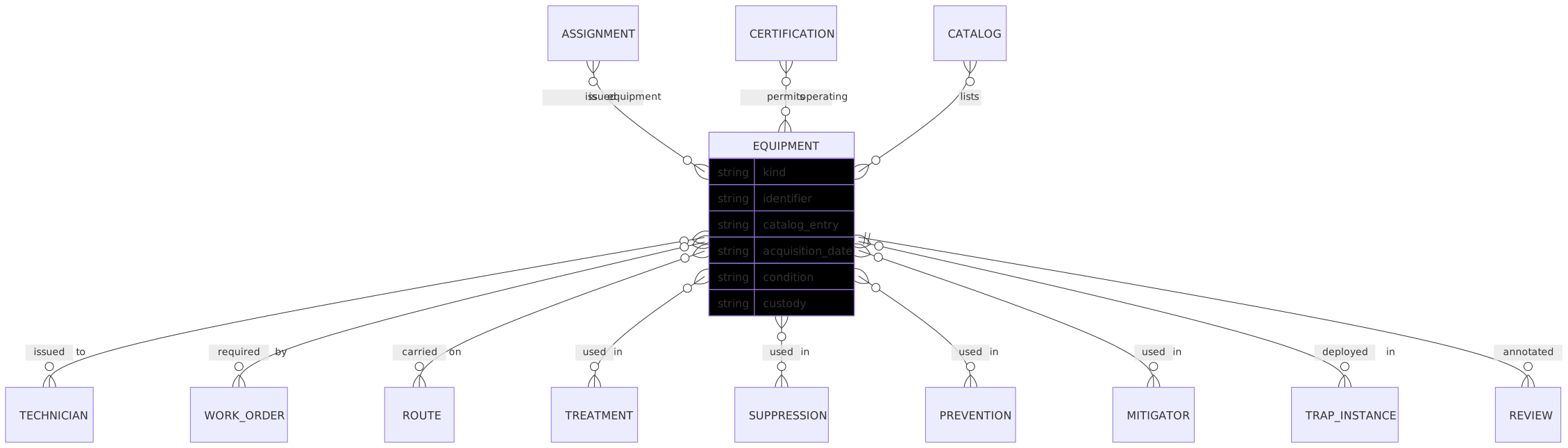
| Assignment | zero or more | is related to | zero or more | Equipment |
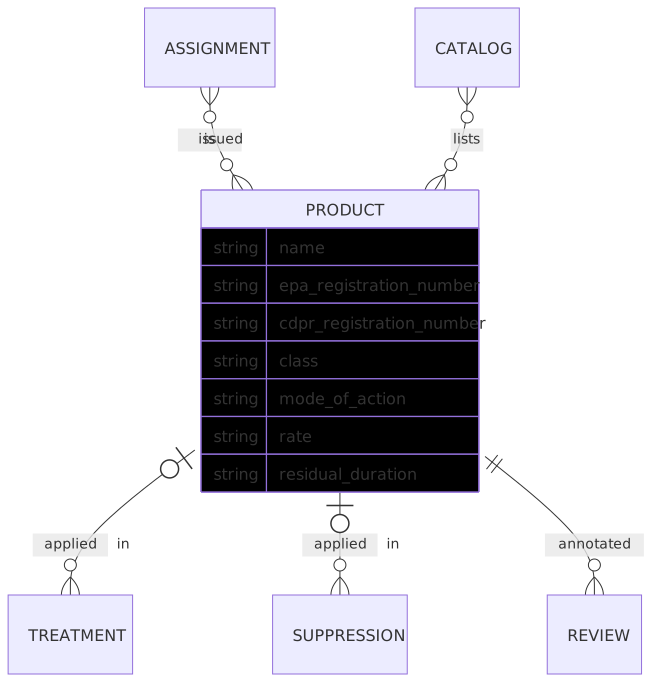
| Assignment | zero or more | is related to | zero or more | Product |
| Assignment | zero or more | is related to | zero or more | Skill |
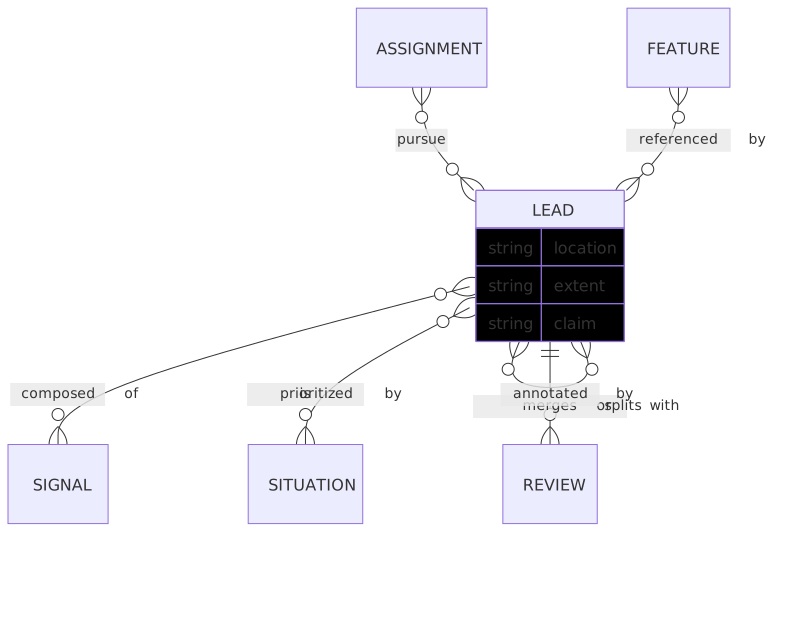
| Assignment | zero or more | is related to | zero or more | Lead |
| Assignment | zero or more | is related to | zero or more | Work order |
| Assignment | zero or more | is related to | zero or more | Feature |
| Assignment | zero or more | is related to | zero or more | Site |
| Assignment | zero or one | is related to | zero or more | Observation |
| Situation | zero or more | is related to | zero or more | Assignment |
| Assignment | exactly one | is related to | zero or more | Review |
| Certification | zero or more | is related to | zero or more | Technician |
| Certification | zero or more | is related to | zero or more | Equipment |
| Certification | exactly one | is related to | zero or more | Review |
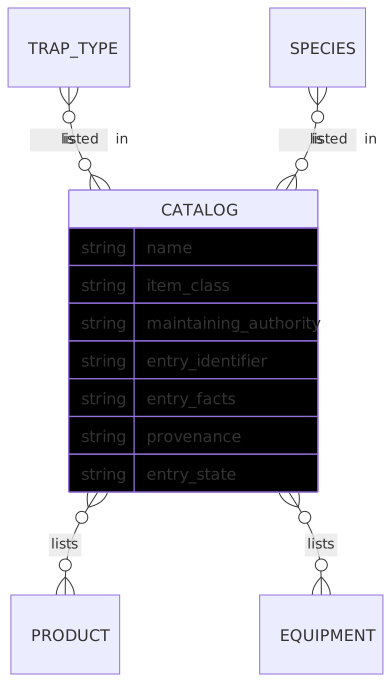
| Catalog | zero or more | is related to | zero or more | Product |
| Catalog | zero or more | is related to | zero or more | Equipment |
| Trap type | zero or more | is related to | zero or more | Catalog |
| Species | zero or more | is related to | zero or more | Catalog |
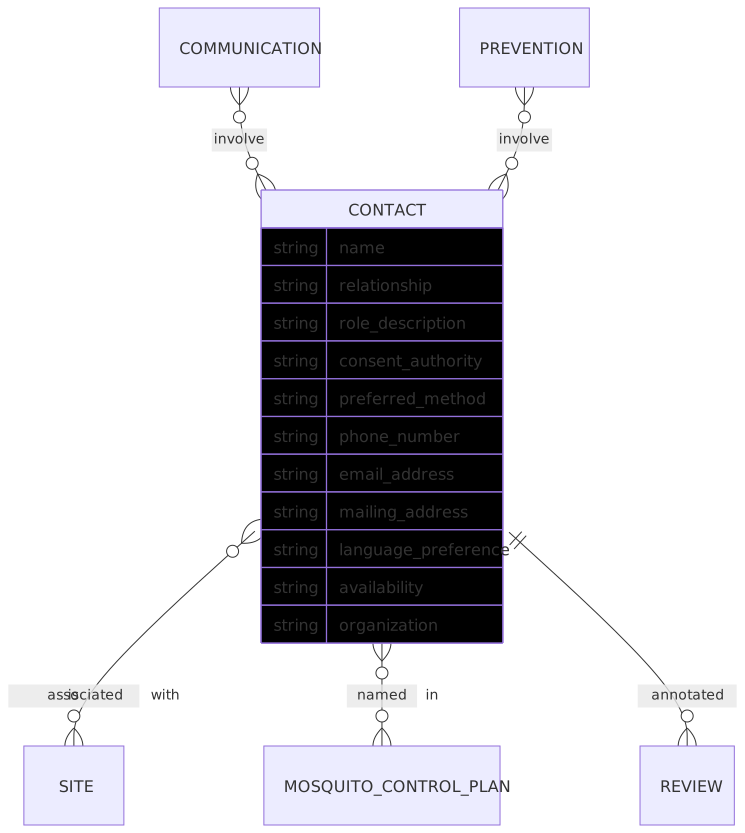
| Communication | zero or more | is related to | zero or more | Contact |
| Communication | zero or more | is related to | zero or more | Site |
| Communication | zero or more | is related to | zero or more | Mosquito control plan |
| Communication | exactly one | is related to | zero or more | Signal |
| Communication | exactly one | is related to | zero or more | Review |
| Contact | zero or more | is related to | zero or more | Site |
| Contact | zero or more | is related to | zero or more | Mosquito control plan |
| Contact | exactly one | is related to | zero or more | Review |
| Equipment | zero or more | is related to | zero or more | Technician |
| Equipment | zero or more | is related to | zero or more | Work order |
| Equipment | zero or more | is related to | zero or more | Route |
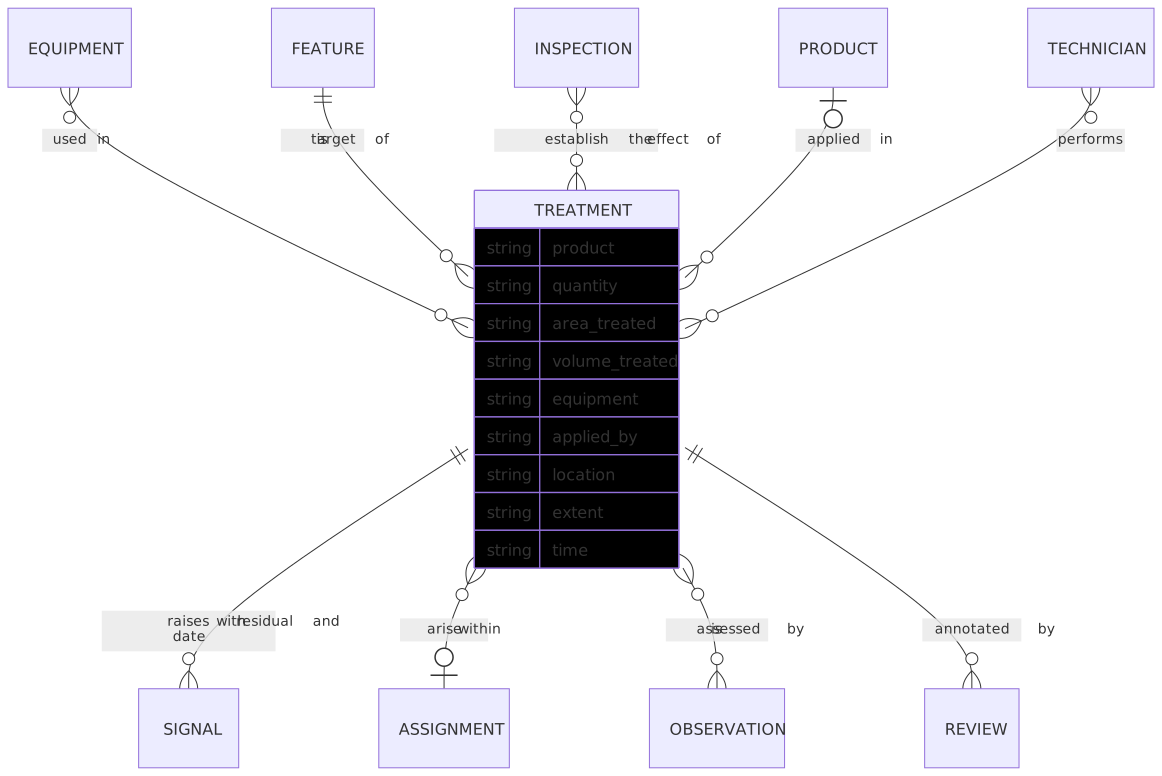
| Equipment | zero or more | is related to | zero or more | Treatment |
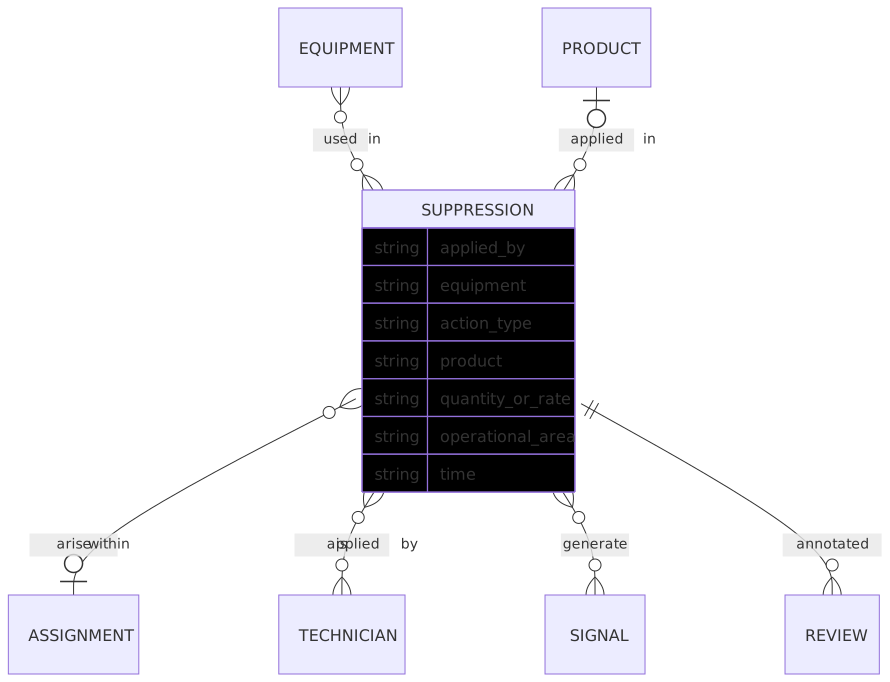
| Equipment | zero or more | is related to | zero or more | Suppression |
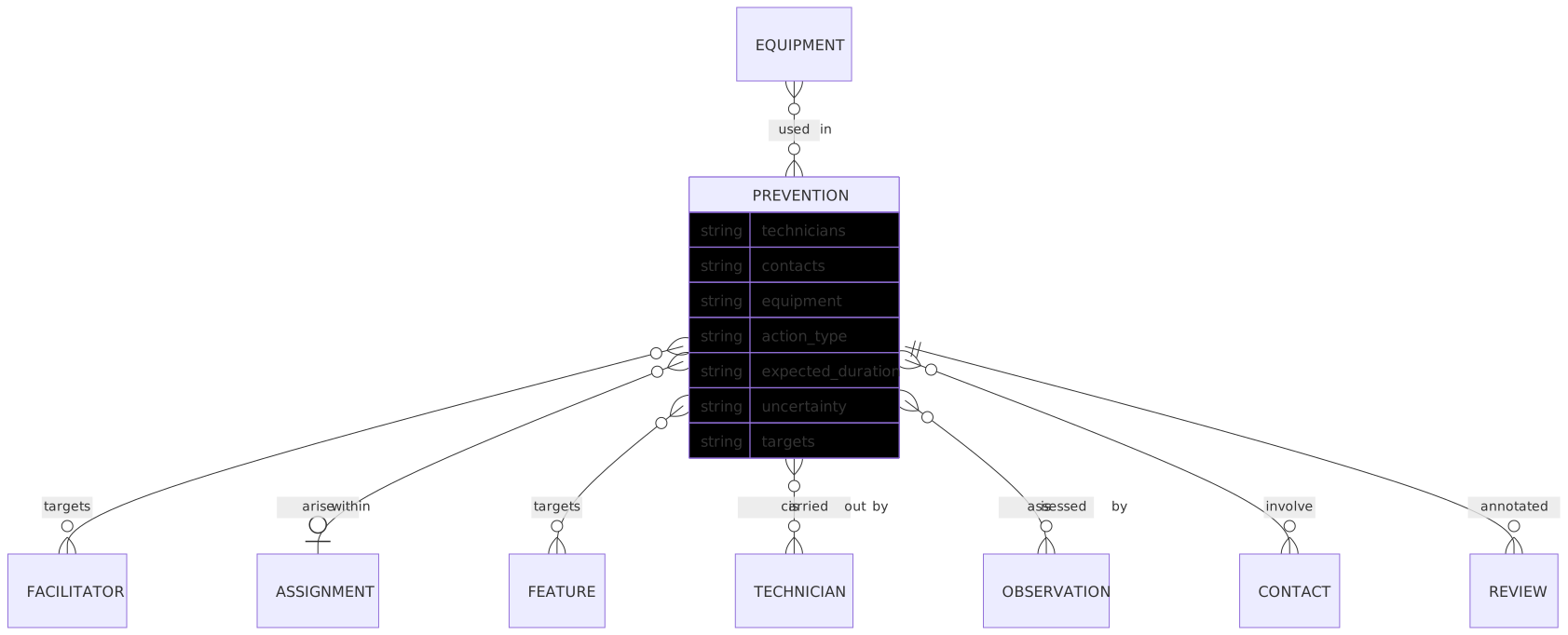
| Equipment | zero or more | is related to | zero or more | Prevention |
| Equipment | zero or more | is related to | zero or more | Mitigator |
| Equipment | zero or more | is related to | zero or more | Trap instance |
| Equipment | exactly one | is related to | zero or more | Review |
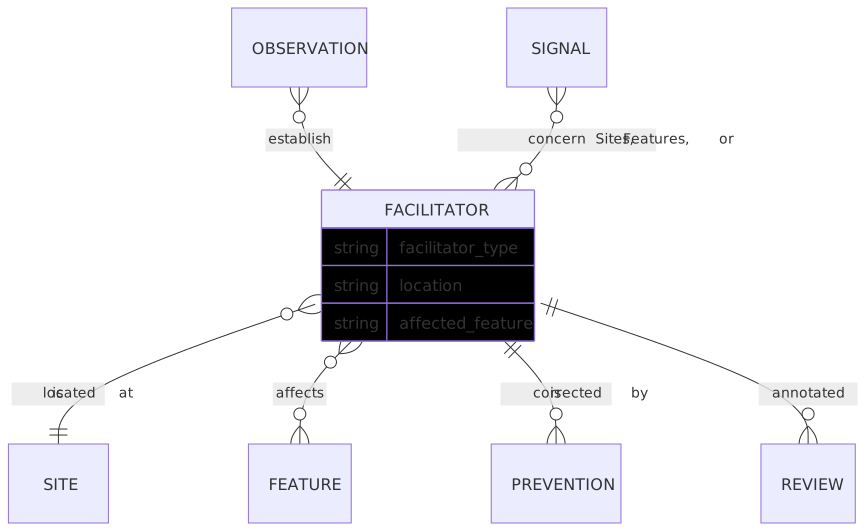
| Facilitator | zero or more | is related to | exactly one | Site |
| Facilitator | zero or more | is related to | zero or more | Feature |
| Observation | zero or more | is related to | exactly one | Facilitator |
| Facilitator | exactly one | is related to | zero or more | Prevention |
| Facilitator | exactly one | is related to | zero or more | Review |
| Feature | zero or more | is related to | exactly one | Site |
| Observation | zero or more | is related to | exactly one | Feature |
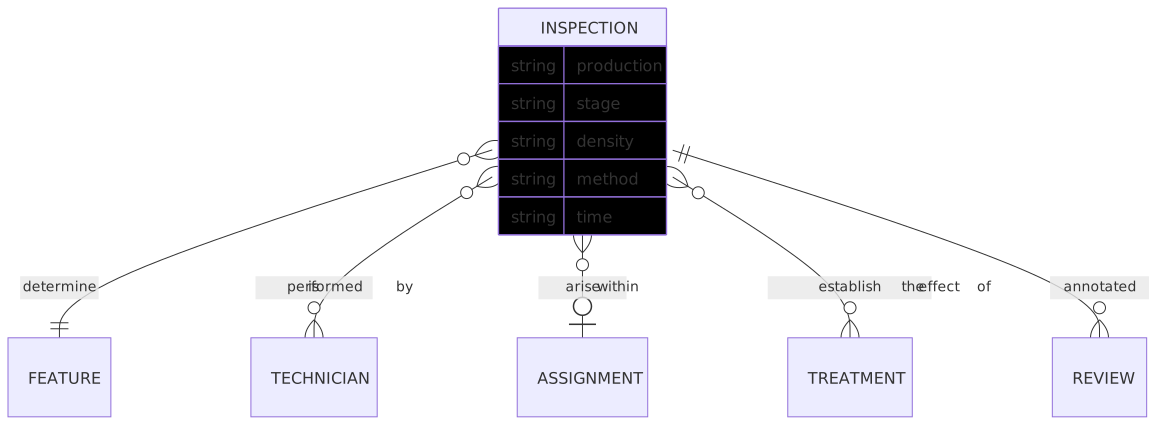
| Inspection | zero or more | is related to | exactly one | Feature |
| Feature | exactly one | is related to | zero or more | Treatment |
| Feature | exactly one | is related to | zero or more | Review |
| Feature | exactly one | is related to | zero or more | Signal |
| Feature | zero or more | is related to | zero or more | Lead |
| Inspection | zero or more | is related to | zero or more | Technician |
| Inspection | zero or more | is related to | zero or one | Assignment |
| Inspection | zero or more | is related to | zero or more | Treatment |
| Inspection | exactly one | is related to | zero or more | Review |
| Lead | zero or more | is related to | zero or more | Signal |
| Lead | zero or more | is related to | zero or more | Lead |
| Lead | zero or more | is related to | zero or more | Situation |
| Lead | exactly one | is related to | zero or more | Review |
| Mitigator | zero or more | is related to | zero or more | Technician |
| Mitigator | zero or more | is related to | zero or more | Assignment |
| Mitigator | exactly one | is related to | zero or more | Review |
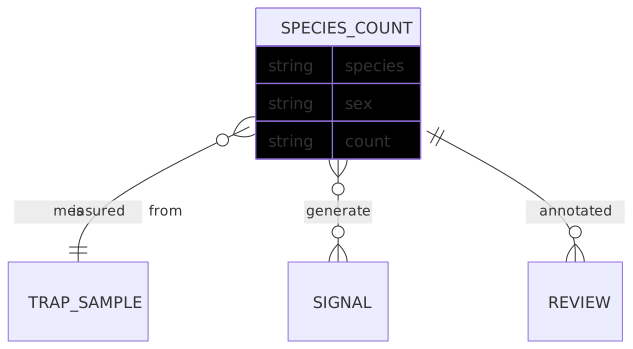
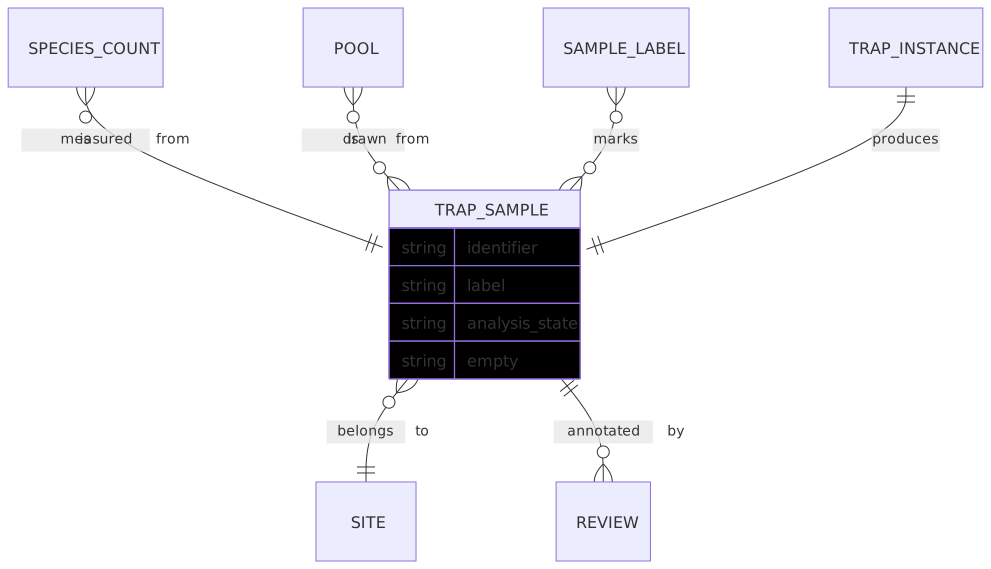
| Species count | zero or more | is related to | exactly one | Trap sample |
| Species count | zero or more | is related to | zero or more | Signal |
| Species count | exactly one | is related to | zero or more | Review |
| Observation | zero or more | is related to | exactly one | Technician |
| Observation | zero or more | is related to | exactly one | Site |
| Observation | exactly one | is related to | zero or more | Review |
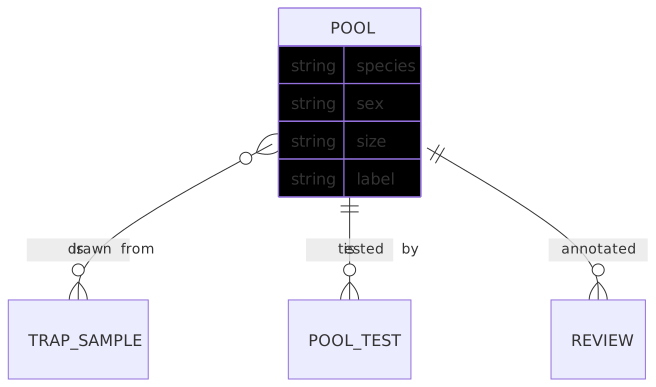
| Pool | zero or more | is related to | zero or more | Trap sample |
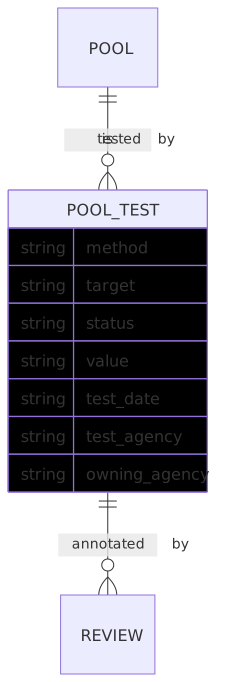
| Pool | exactly one | is related to | zero or more | Pool test |
| Pool | exactly one | is related to | zero or more | Review |
| Pool test | exactly one | is related to | zero or more | Review |
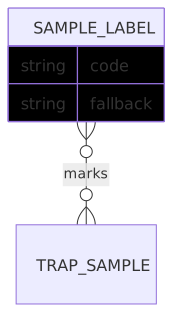
| Sample label | zero or more | is related to | zero or more | Trap sample |
| Prevention | zero or more | is related to | zero or one | Assignment |
| Prevention | zero or more | is related to | zero or more | Feature |
| Prevention | zero or more | is related to | zero or more | Technician |
| Prevention | zero or more | is related to | zero or more | Observation |
| Prevention | zero or more | is related to | zero or more | Contact |
| Prevention | exactly one | is related to | zero or more | Review |
| Product | zero or one | is related to | zero or more | Treatment |
| Product | zero or one | is related to | zero or more | Suppression |
| Product | exactly one | is related to | zero or more | Review |
| Review | zero or more | is related to | exactly one | Technician |
| Review | zero or more | is related to | zero or more | Work order |
| Review | zero or more | is related to | zero or more | Review |
| Route | zero or one | is related to | zero or more | Assignment |
| Route | zero or more | is related to | one or more | Technician |
| Route | exactly one | is related to | zero or more | Review |
| Observation | zero or more | is related to | zero or more | Signal |
| Public report | zero or more | is related to | zero or more | Signal |
| Treatment | exactly one | is related to | zero or more | Signal |
| External source | exactly one | is related to | zero or more | Signal |
| Signal | zero or more | is related to | zero or more | Site |
| Signal | zero or more | is related to | zero or more | Facilitator |
| Signal | zero or more | is related to | zero or more | Situation |
| Signal | exactly one | is related to | zero or more | Review |
| Situation | zero or more | is related to | zero or more | Situation |
| Situation | exactly one | is related to | zero or more | Review |
| Site | exactly one | is related to | zero or more | Review |
| Suppression | zero or more | is related to | zero or one | Assignment |
| Suppression | zero or more | is related to | zero or more | Technician |
| Suppression | zero or more | is related to | zero or more | Signal |
| Suppression | exactly one | is related to | zero or more | Review |
| Technician | zero or more | is related to | zero or more | Treatment |
| Technician | zero or more | is related to | zero or more | Skill |
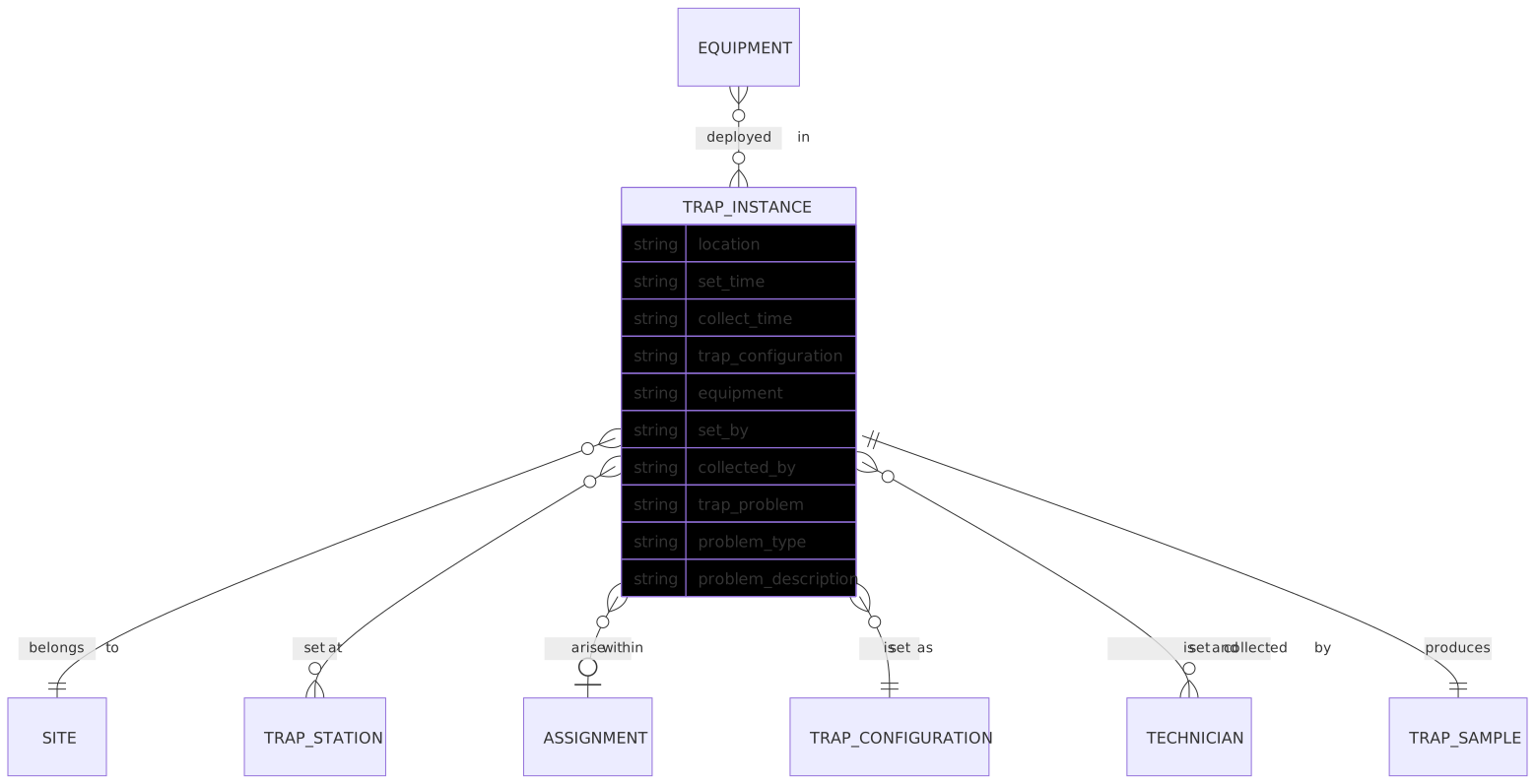
| Trap instance | zero or more | is related to | exactly one | Site |
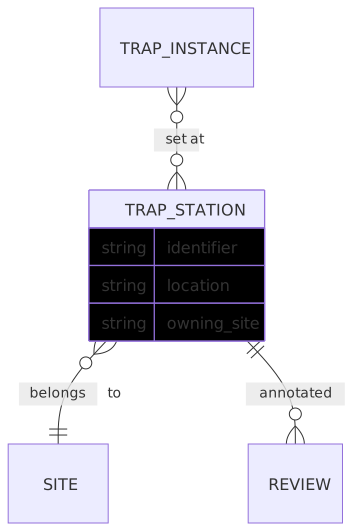
| Trap instance | zero or more | is related to | zero or more | Trap station |
| Trap instance | zero or more | is related to | zero or one | Assignment |
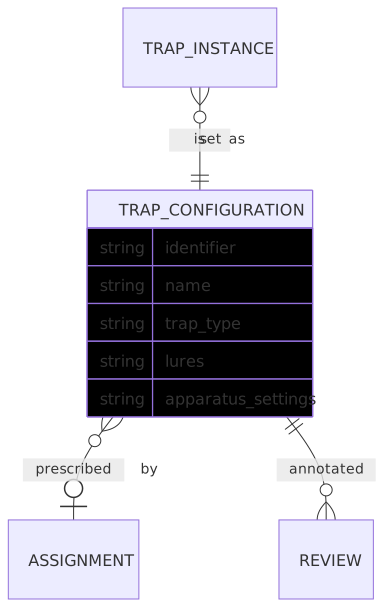
| Trap instance | zero or more | is related to | exactly one | Trap configuration |
| Trap instance | zero or more | is related to | zero or more | Technician |
| Trap instance | exactly one | is related to | exactly one | Trap sample |
| Trap configuration | zero or more | is related to | zero or one | Assignment |
| Trap configuration | exactly one | is related to | zero or more | Review |
| Trap sample | zero or more | is related to | exactly one | Site |
| Trap sample | exactly one | is related to | zero or more | Review |
| Trap station | zero or more | is related to | exactly one | Site |
| Trap station | exactly one | is related to | zero or more | Review |
| Treatment | zero or more | is related to | zero or one | Assignment |
| Treatment | zero or more | is related to | zero or more | Observation |
| Treatment | exactly one | is related to | zero or more | Review |
| Work order | zero or more | is related to | zero or more | Skill |
Conflicting cardinalities
The two documents that state each of these pairs disagree. The map draws the form from the document listed first in the ontology index, and each concept's own section draws its own document's form.
ASSIGNMENT o|--o{ OBSERVATION(Assignment) versusOBSERVATION |o--|| ASSIGNMENT(Observation).FACILITATOR ||--o{ PREVENTION(Facilitator) versusPREVENTION }o--o{ FACILITATOR(Prevention).FEATURE ||--o{ SIGNAL(Feature) versusSIGNAL }o--o{ FEATURE(Signal).REVIEW }o--o{ WORK_ORDER(Review) versusWORK_ORDER ||--o{ REVIEW(Work Order).
Entities named by a relation but carrying no concept document: SKILL, TRAP_TYPE, SPECIES, PUBLIC_REPORT, EXTERNAL_SOURCE, MOSQUITO_CONTROL_PLAN. Stub documents now exist for all six — Skill, Trap Type, Species, Public Report, External Source, Mosquito Control Plan — but the stubs are unwritten: they carry no definition and are not a contract.
Constraint
A Constraint is a condition at a Site that obstructs work. It limits, delays, or prevents lawful physical access to the property or to a Feature on it, or it puts the Technicians, the public, or property at risk during reconnaissance, inspection, treatment, or prevention. A locked gate, a refused entry, an unstable bank, and a confined space are all Constraints.
Assignment
An Assignment is a directed operational action: one piece of work given to a Technician at a place, with a purpose and a kind. It is the unit through which work is carried out, and it records what the work was, who did it, and when.
Certification
A Certification is an authorization granted by an issuing authority that permits a Technician to do particular work or operate particular Equipment. It has an issuer, a scope, and a period of validity, and it exists whether or not Nidus records it.
Catalog
A Catalog is a curated list of items of one class, held outside any district, that gives each item a single identity the districts share: a product catalog, an equipment catalog, a trap type catalog, a species catalog. The item is named once, the same way everywhere, and records from different districts are read against one another.
Communication
A Communication is a real-world exchange of information between the district and another party, recorded as a historical artifact: an email, a text, a phone call, a letter, an in-person visit, or a public report.
Contact
A Contact is a person associated with one or more Sites who holds, manages, or speaks for the property there: an owner, a tenant, a property manager, a maintenance lead, a farmer, an irrigation manager, or an association representative. The Contact is whom the district communicates with, and whose consent allows work at the Site.
Equipment
An Equipment is a durable item the district owns and issues to carry out work: a truck, a vessel, a drone, a backpack sprayer, a dipper, a pair of waders, a mosquito trap. It has identity in the district's inventory, it serves many pieces of work, and it outlasts all of them.
Facilitator
A Facilitator is a physical, behavioral, or environmental condition at a Site that makes water persist, concentrate, or become suitable for mosquito development, without being the origin of that water. Poor grading, blocked drainage, irrigation overflow, overhanging vegetation, and structural shade are examples of Facilitators. A Facilitator is recognized by Observation.
Feature
A Feature is a real-world mosquito-relevant object located within a Site that holds or can hold water and support mosquito production, as one visit found it. Pools, ponds, storm drains, irrigation structures, containers, and wetlands are Features. A Feature is recognized in the field and exists independently of Nidus; the record of it is scoped to the visit that found it.
Inspection
An Inspection is a field procedure carried out on one Feature to establish whether it is producing mosquitoes at the time: a structured examination by dipping, visual confirmation, or a sampling device, recorded with the production it found and, where production was found, its stage and density.
Lead
A Lead is a geographically specified investigative hypothesis. It names a place worth investigating and what is suspected there, and it directs reconnaissance toward where a source may be found.
Mitigator
A Mitigator is a discrete action, resource deployment, or procedural adjustment taken during a visit that gains access, or reduces the hazard, while a Constraint stands. Calling ahead, using an alternate entry point, donning personal protective equipment, bringing an ATV, requesting law enforcement, or securing an animal are examples of Mitigators.
Species Count
A Species Count is the number of specimens of one species and sex found in a Trap Sample. It is a measurement produced by analysing a collected sample, and it exists only where that analysis has happened.
Observation
An Observation is a fact established in the field by a Technician about a Site, a Feature, or a Facilitator, through direct interaction with the thing observed. It records what was found at that place and at that time, and it is the evidence behind any change to what is recorded about the subject. Confirmed absence is an Observation: finding no standing water in a pool is as much a finding as finding water in it.
Pool
A Pool is a group of specimens drawn from exactly one Trap Sample, of a single species and sex, submitted for testing. It is what the laboratory tests for a pathogen or another target, and its results are stored with the Pool Tests.
Pool Test
A Pool Test is one test performed on a Pool for one target: a pathogen such as West Nile, St Louis encephalitis, or western equine encephalitis, or another thing the laboratory looks for. Several Pool Tests run on one Pool at the same time, one per target.
Sample Label
A Sample Label is a durable physical label carrying an opaque printed code. It travels with a Trap Sample and is the human-readable face of that sample until the sample is processed.
Prevention
A Prevention is an operational action whose primary intent is to reduce the probability of future mosquito production, whether or not mosquitoes are present now. Correcting the grading that pools water, clearing a blocked drain, repairing an irrigation overflow, filling a depression, and screening a cistern are Preventions.
Product
A Product is a control material the district applies in an intervention to reduce or eliminate mosquito production: a larvicide, a biological control agent, or another containment substance. The district names it, and the record carries what that material is, how it acts, the rate it is applied at, and how long it keeps working.
Review
A Review is a recorded evaluation of one or more objects, judging correctness, completeness, performance, compliance, or outcome validity. It is the district's oversight of its own record, and it is the act through which a recorded value is corrected.

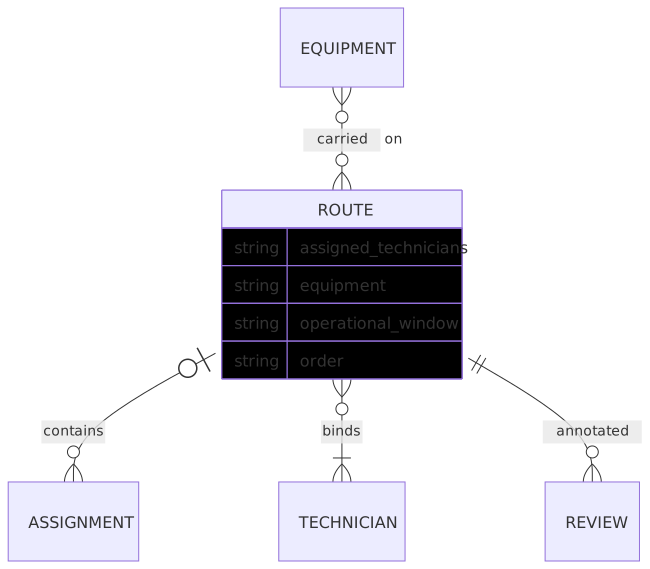
Route
A Route is a time-bounded coordination structure that sequences the Assignments given to Technicians over a defined work period. It orders the work of a day, and it exists to carry the Assignments placed in it.
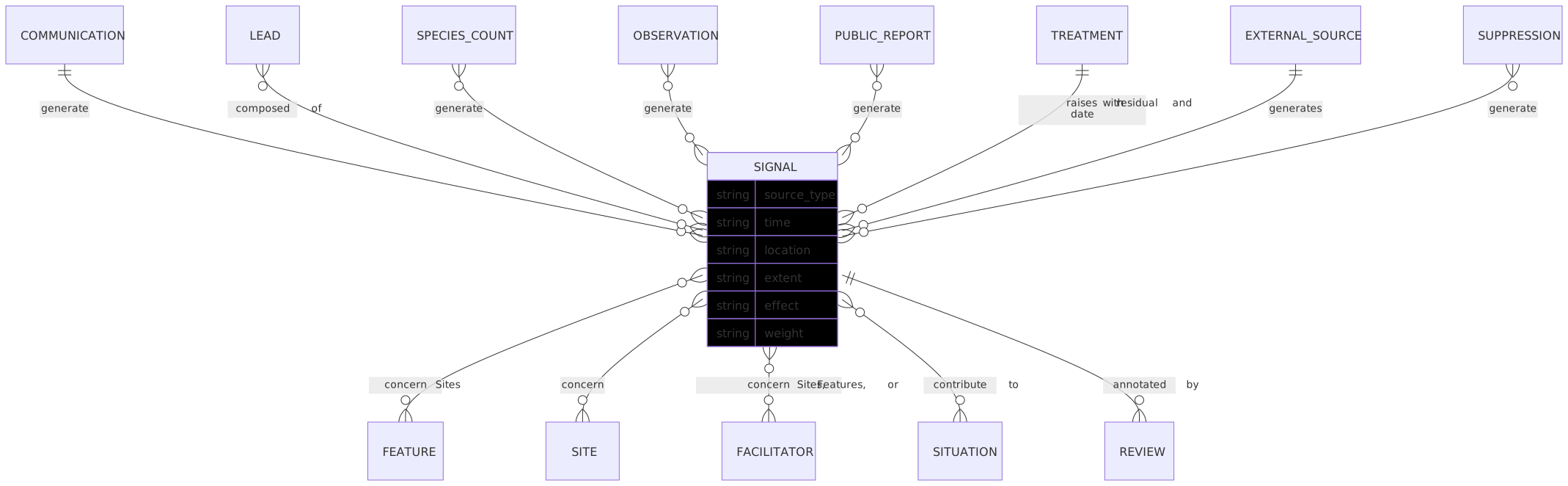
Signal
A Signal is an environmental or historical indicator relevant to whether mosquito production is occurring or is possible. A drone image, a resident's report, a pattern across trap records, and an aging treatment are Signals. A Signal is material Nidus reasons from.
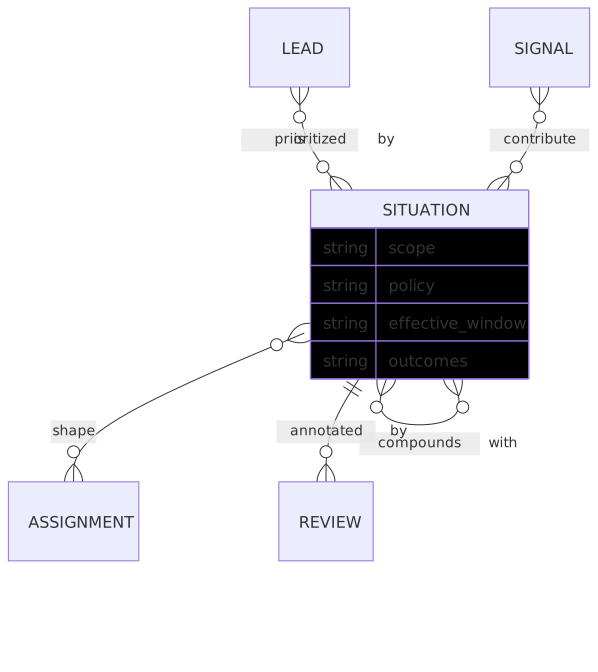
Situation
A Situation is the district's reading of conditions for a defined scope, together with the operational guidance that follows from it: what should be done, and at what intensity. It is established by interpreting Signals against the district's aims and its own situation rules, and it sits between that interpretation and the planning of work — broader than a Lead, less concrete than an Assignment. It influences how Leads are prioritized, which methods are available, what resources are committed, and how coordination and communication are scaled.
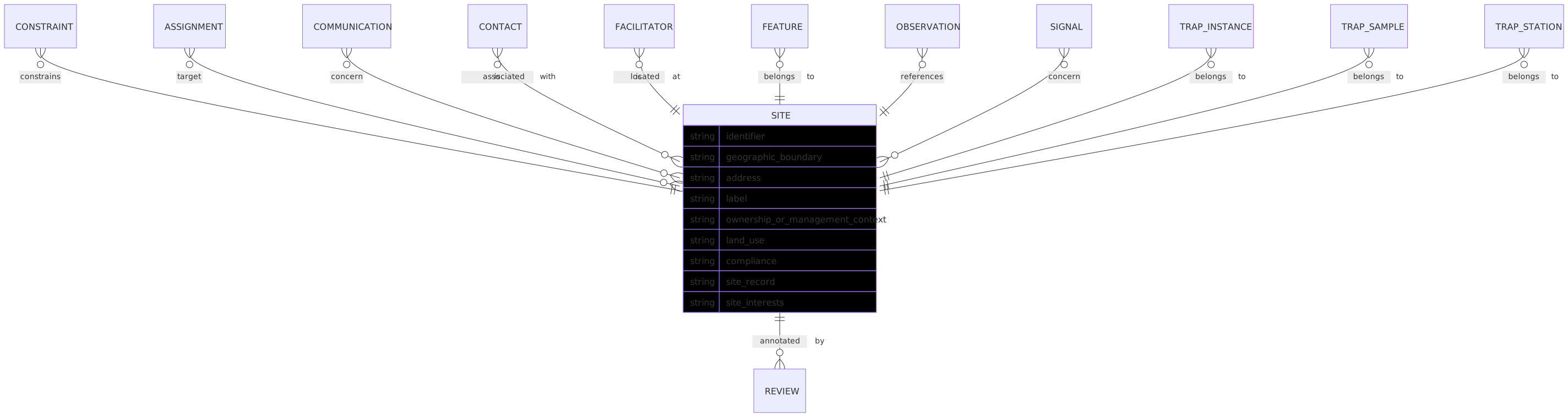
Site
A Site is a geographic area under a single ownership, control, or responsibility, where mosquito-related activities take place. It is the place where Features and Facilitators are found. Its Site Record holds every record made there, at the place it was made, and its derived Site Interests report, for each kind recorded, a count and a persistence probability.
Suppression
A Suppression is an operational intervention intended to reduce active mosquito presence, density, or risk across an area, rather than to treat one Feature. An adulticide application, a barrier treatment, a wide-area larviciding run, and a sterile insect release are all Suppressions.
Technician
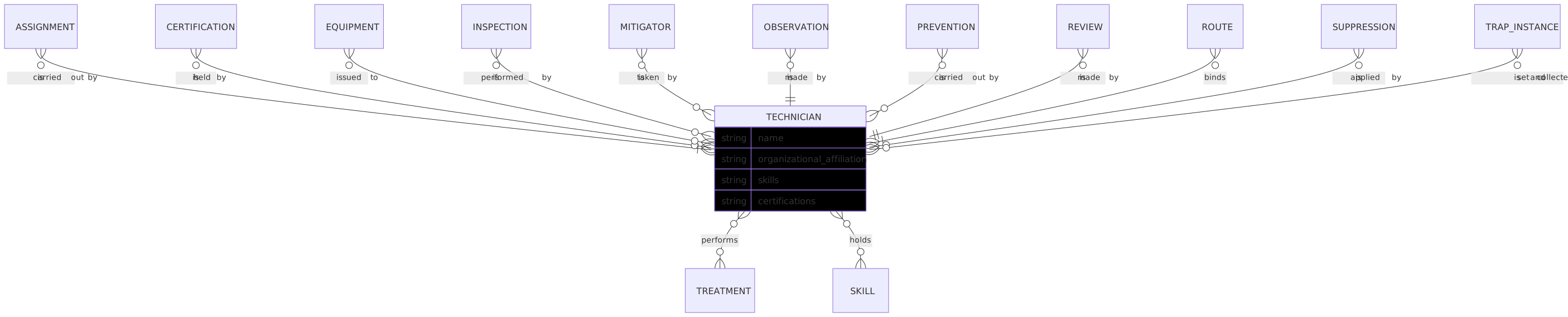
A Technician is a person with the authority and qualifications to carry out the district's operational work: reconnaissance, inspection, treatment, and prevention. They are the accountable actor behind every operational record.
Trap Instance
A Trap Instance is one instance of the trapping act: the place the trap was set, the Trap Configuration it was set as, the equipment deployed, the Technicians who set and collected it, the set and collect datetimes, and any trap problem encountered. It produces one Trap Sample.
Trap Configuration
A Trap Configuration is a prescription for setting a trap: the trap type, the lure combination, and any settings the trap apparatus itself carries. The district defines the configurations it fields, and a Technician sets a trap to one of them.
Trap Sample
A Trap Sample is the physical sample produced by a Trap Instance: the adult specimens one trap collected at one place over one interval. It carries its own identity and label, and its composition appears once the lab has analyzed it.
Trap Station
A Trap Station is an established location at which traps are set consistently over time. It is a district decision about where trapping happens, the reference a Trap Instance is set against, and the identity a trapping series is attributed to.
Treatment
A Treatment is an intervention applied to one Feature at a known place and time to kill the mosquitoes it produces or will produce once water returns. A larvicide application, a pre-treatment of dry ground in anticipation of water, and the stocking of a biological control such as mosquitofish are all Treatments. The record states what was applied, how much, where, and when.
Work Order
A Work Order is a standing statement of operational work needed at a place: what should be done, where, and what it requires. It states the need once and persists across the Assignments that carry it out, whether those send a Technician to investigate a Lead or to do work that reduces the population directly.